- Lifted top-segment CTR by ~38%
- Cut cost per conversion ~30%
- Lifted conversion rate by ~49%
Sole driver of this AI-driven project: I partnered with MLT-level stakeholders, led two rounds of qualitative and quantitative research, coded the custom tool, and shipped the final deliverables.
After the brand refresh, our visual style still wasn't cutting through an increasingly crowded competitive landscape, and weak top-of-funnel differentiation showed in lead-gen and demand-gen results. The brand needed elevation, but competing visions across teams left the next step unclear.
The deeper I went into the brand character phenomenon, the clearer it became: brand characters work as accelerators of emotional bonding. That bond can run positive or negative and is context-dependent. So from day one my approach was obsessed with variability, making sure the character could hold across a wide range of contexts and situations.
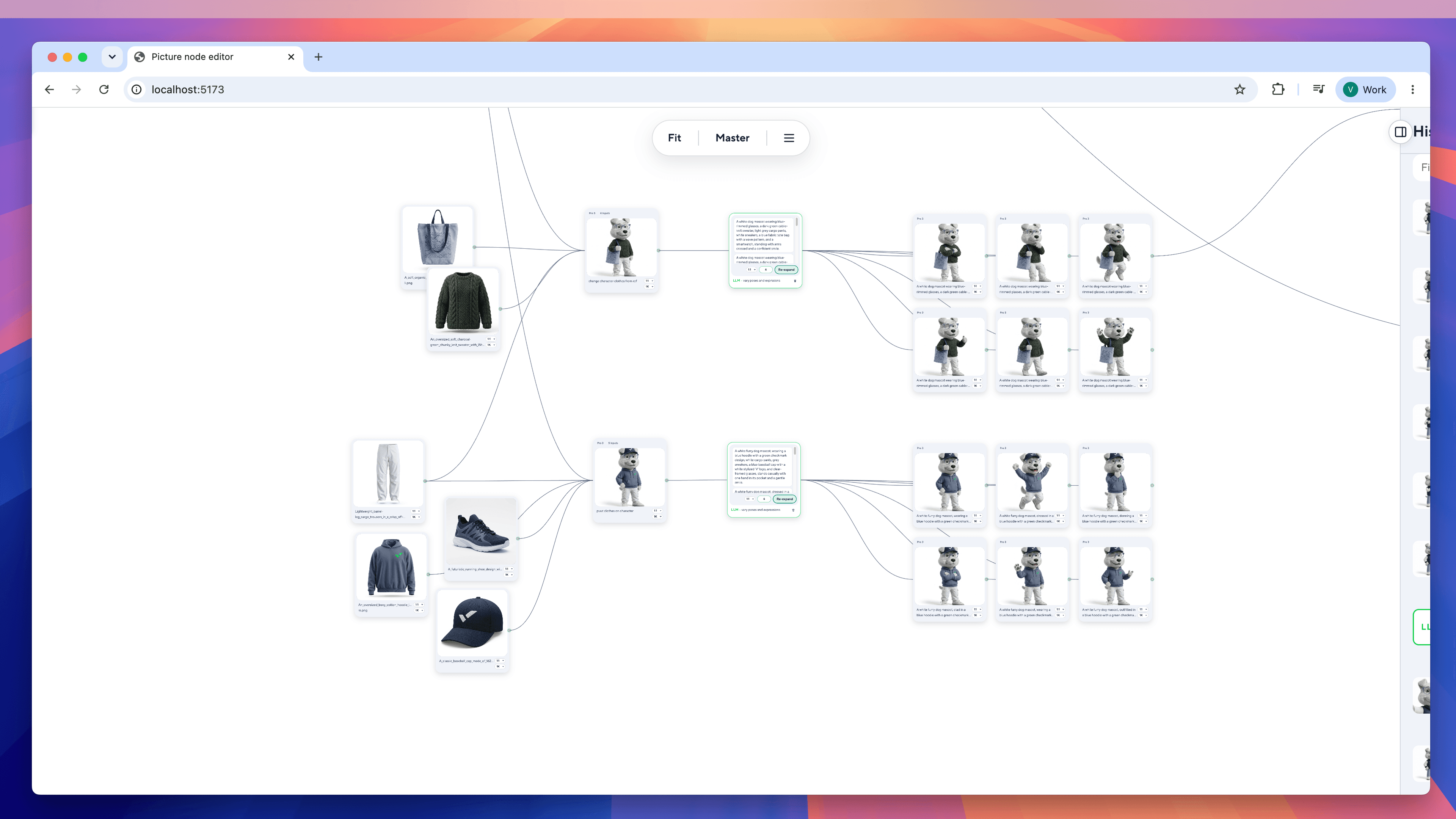
Legal restrictions were the real blocker, so I built my own node editor that turned the constraint into a pipeline: scaling the concept at production volume with tight control, all inside strict legal guardrails through safe prompt engineering, with every output archived against its IP and compliance sign-off.
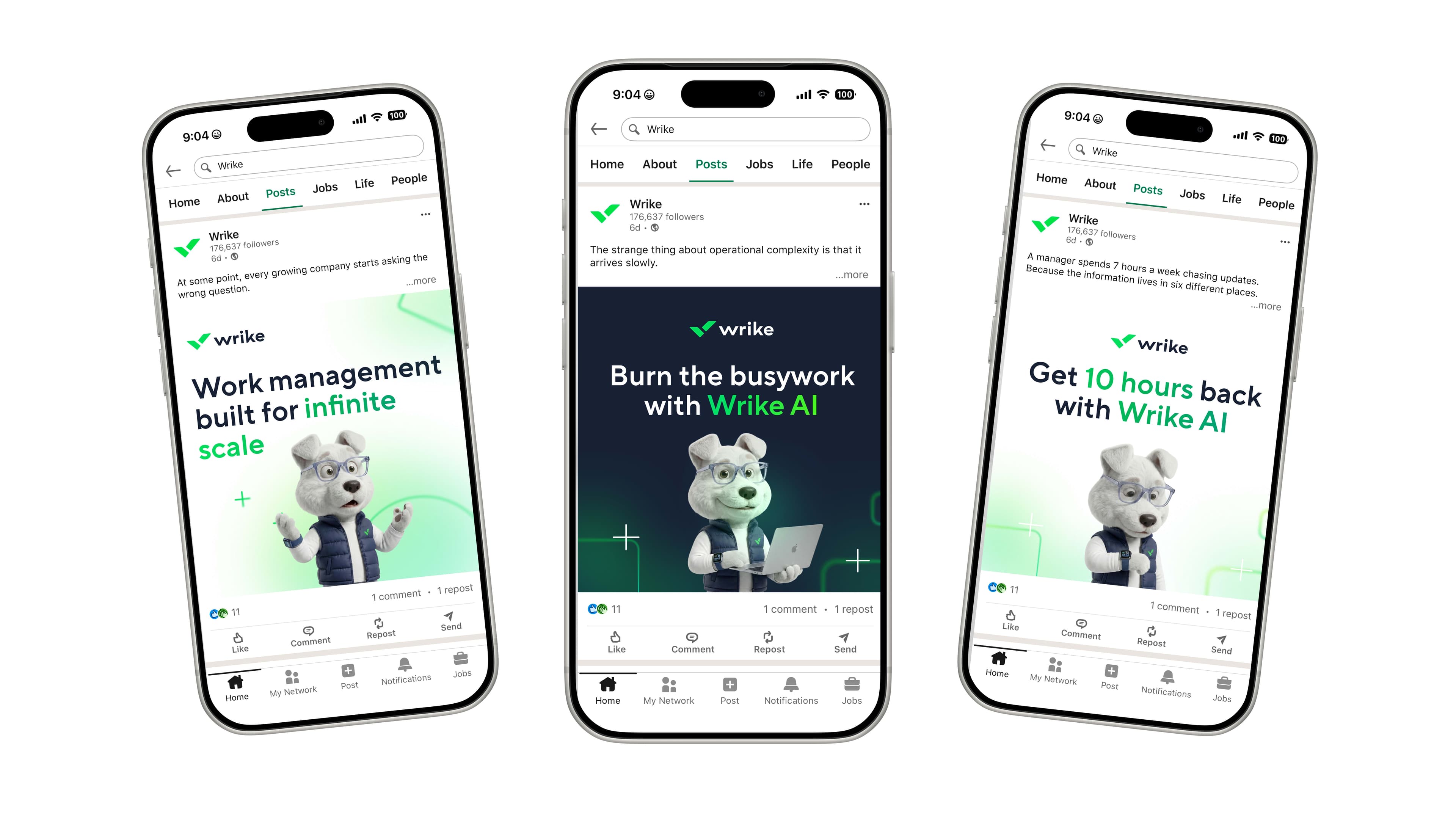
I felt like a surgeon: the brand already existed, and my hard-coded rule was that the brand character should never crowd out the other brand elements, but live in synergy with them.
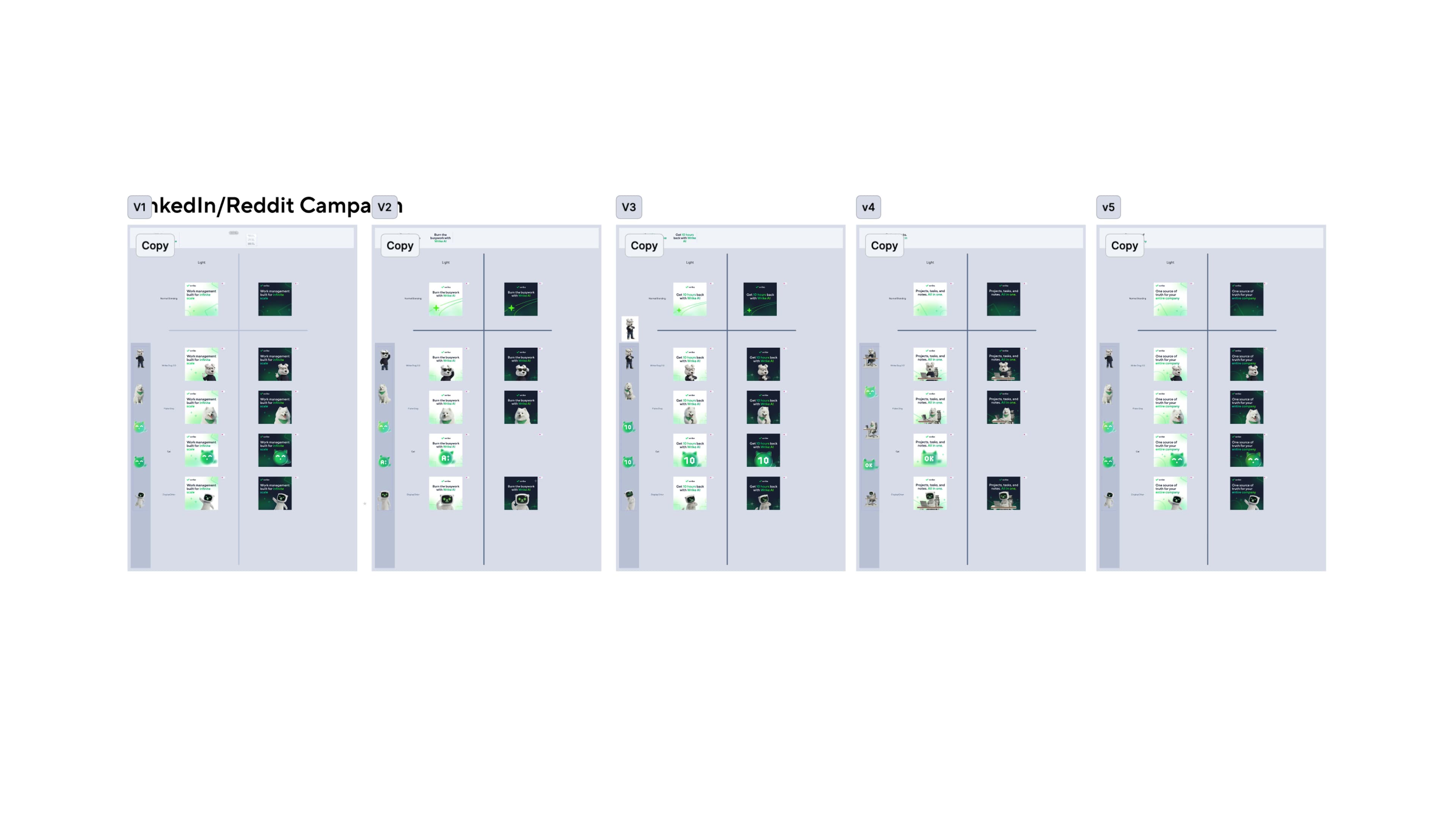
I explored multiple characters not just to gauge their potential in the tests we ran, but to drive cross-team alignment, surfacing the strengths and weaknesses of each direction and helping pivot the brand's feel in the visuals.
What started with a bittersweet "this isn't the right direction" became one of the biggest projects of my career. Pulling brand, AI, legal, and code into one working system, and bringing real design and technical depth to something like a brand character, was one of the most important lessons I've had. It probably changed my design judgement for good.