- Shipped to 2M+ users in product
- Live on a site with millions of monthly visitors
- Scaled across every marketing channel
I initiated and owned this work end to end: from early drafts and pitching, through alignment with the marketing, AI, and product teams, to formalising the guidelines and overseeing rollout across product, web, video, and other marketing channels.
The AI sub-branding was fragmented and off-brand, a real risk just as a major AI push was about to launch. Two months to redesign it before the campaigns went live, and one shot to define our position in a fast-heating AI landscape.
I'm developing, shipping, and A/B testing these interaction designs in production. Beyond building the computational layer of the Wrike brand, I'm establishing new post-AI workflows with web PMs and developers.
The idea was simple: reorder and multiply what the brand already owned, instead of bolting on new elements. That let us highlight AI now without adding anything that would date once AI is standard, with nothing to rip out later.
In-product, the branding scaled across a range of AI features, including Wrike Copilot and Agents.
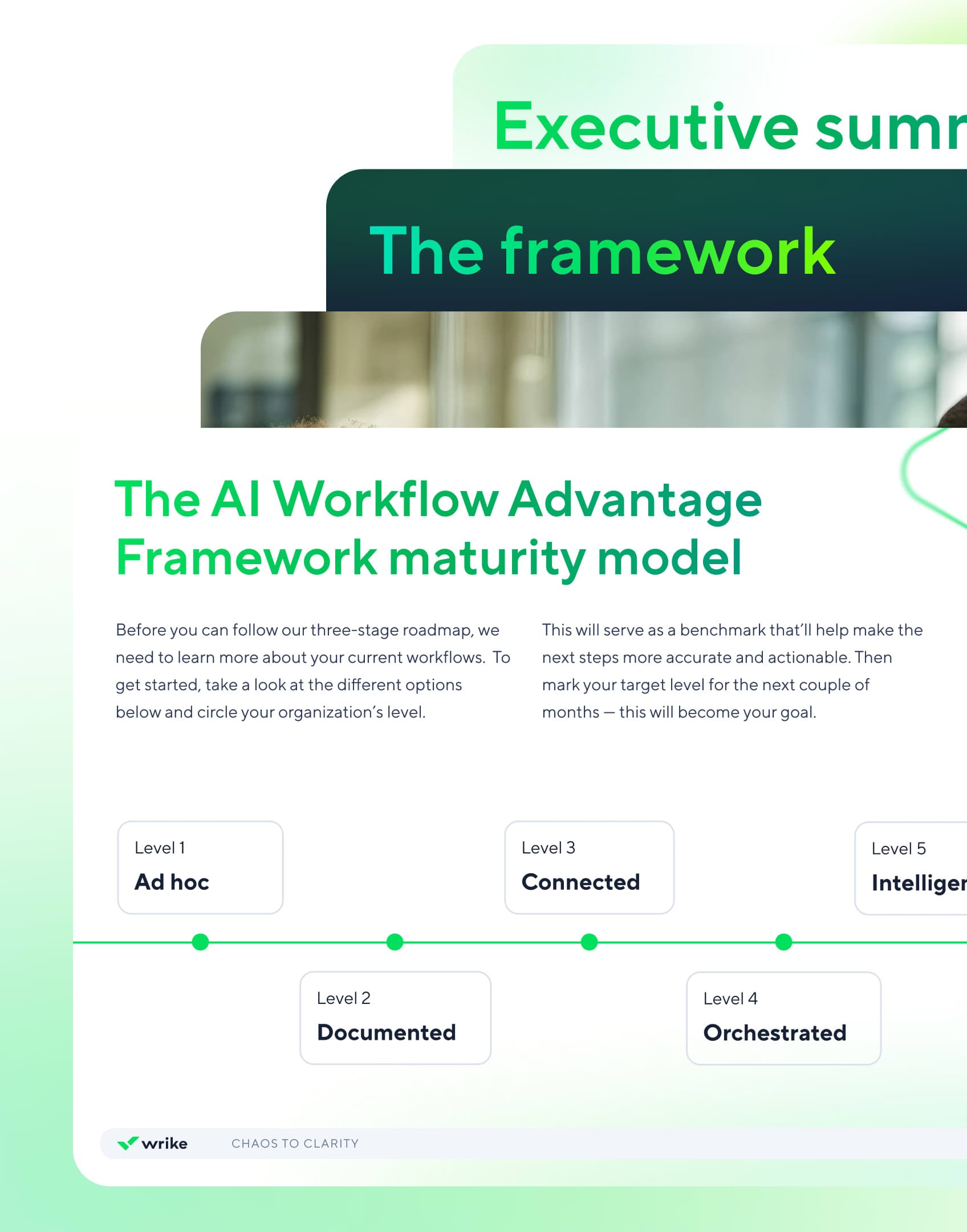
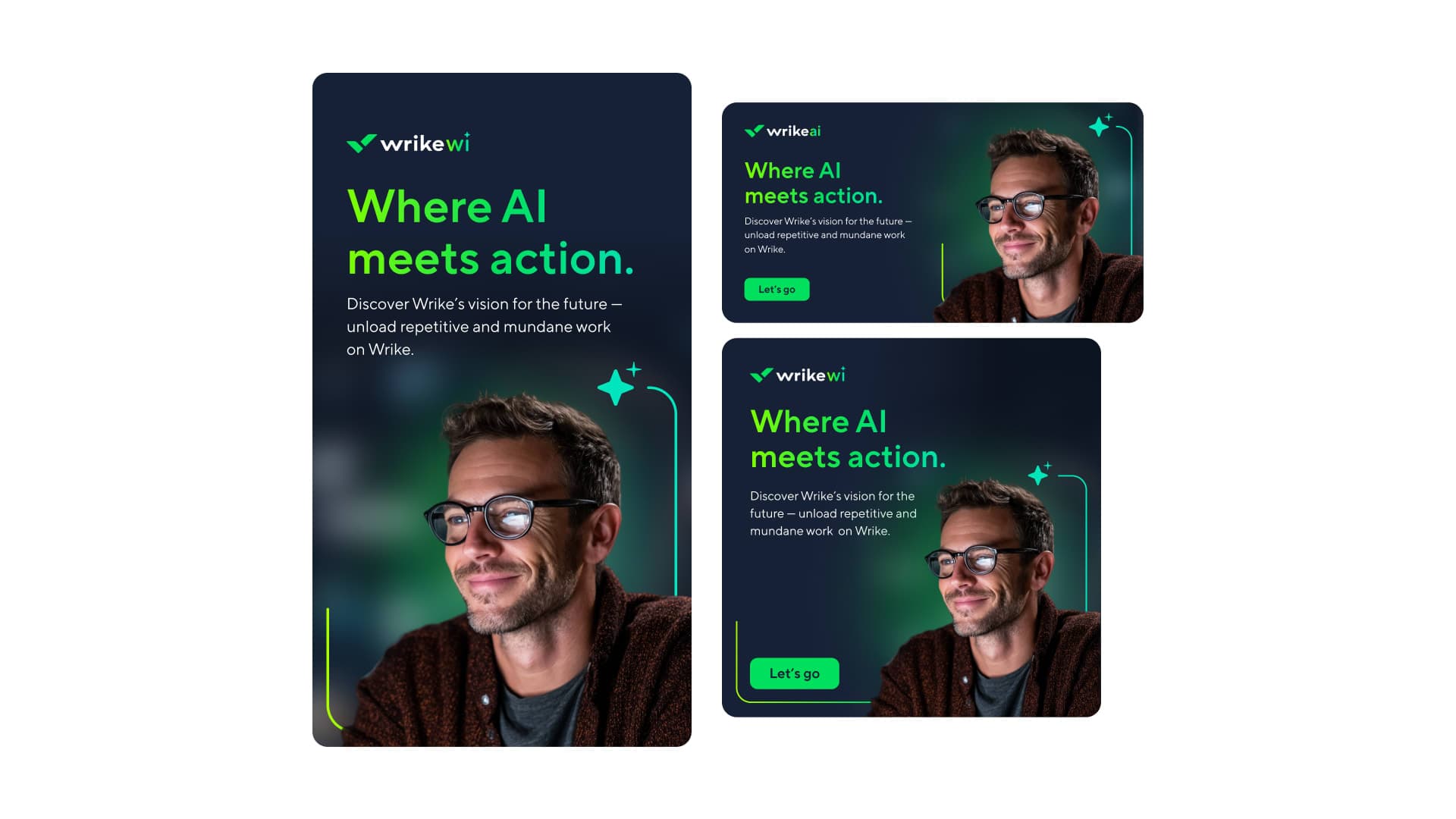
Scaled across the full marketing ecosystem, from social and paid media to video, and every touchpoint in between.
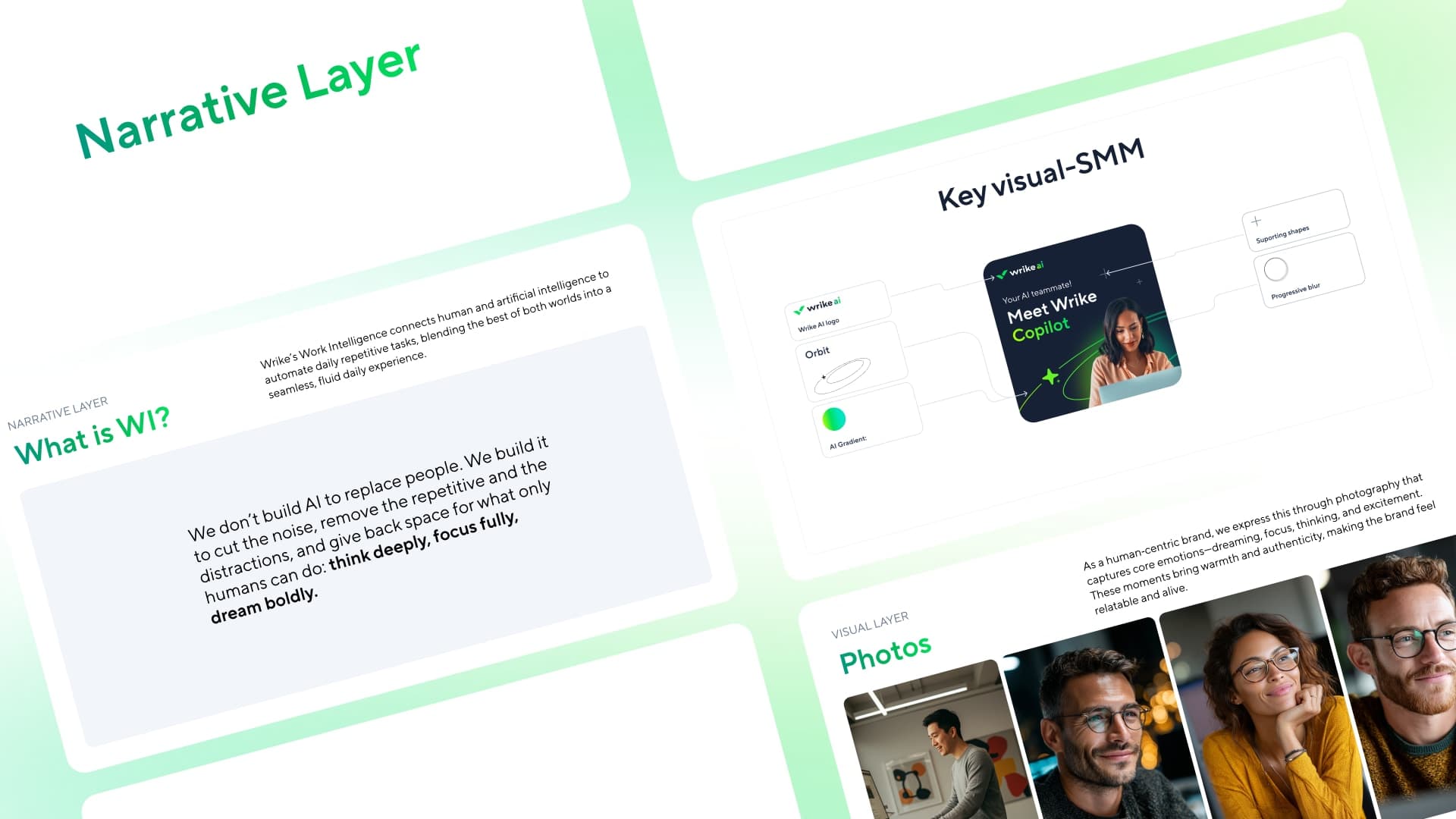
Of course we formalised the visuals and restrictions in guidelines. The real work was the human-centric foundation: clear from the start that we're an enabler, not a replacement.
Snippets from back-to-back sketching sessions with the design team. Special thanks to Anton Antoniuk, Alexey Atapin, and Prem Cholewa.
I started this initiative only a few months into the company, with every designer holding strong, well-formed opinions on how it should look. I rearranged those inputs into something stronger than any single one.